About
Signal & Post
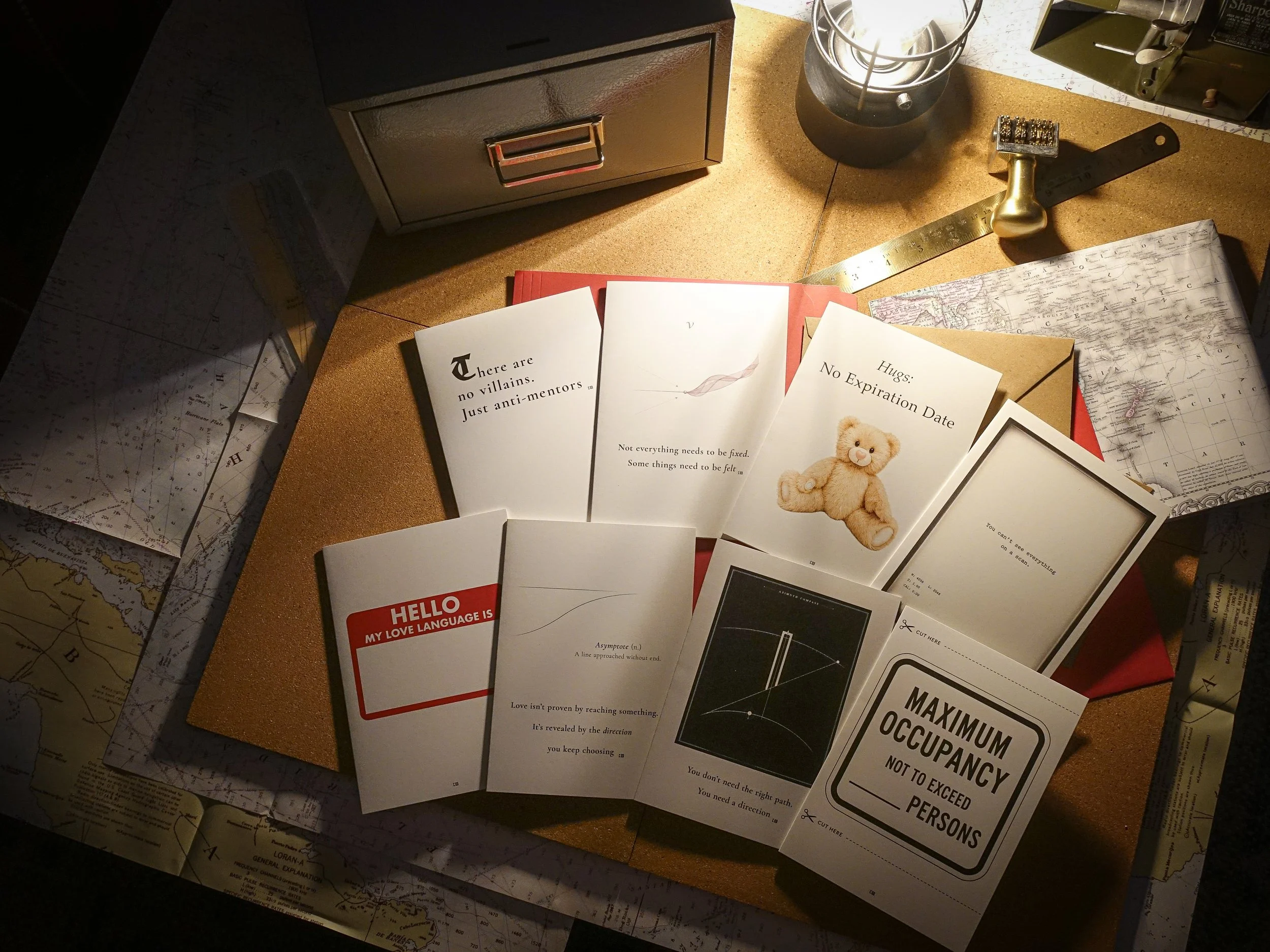
Can a card change your life?
War does not end on battlefields. It permeates into households and into language. Anniversaries, birthdays, weddings, holidays—all celebrated in predictable loops year after year—have boilerplates baked into their nature.
But what about the rest of the year, where life actually takes place?
Signal & Post began with a physicist who once wanted to build a time machine. Perhaps, she thought, she could go back, rewrite the past, and alter just enough variables to grow up with more hugs.
But after working with NASA, she noticed that while the world kept inventing, optimizing, automating, and accelerating, people still struggled to comfort one another, tell the truth, or articulate what they were actually feeling.
The urge to build gadgets for the future shifted into a more urgent, human-centered pursuit: designing instruments of correspondence for the moments beyond standard occasions.
From the profound gravity of trauma-shaped households, job losses, and legal battles, to mismatched love languages, responses that defy a simple yes or no, and the sheer existential dread of HOA nonsense—Signal & Post cards draw from an interdisciplinary background in physics, astronomy, philosophy, marine conservation, fine jewelry, and more.
They are precision-built for the full spectrum of human experience—not just its ceremonial peaks—finally addressing the one thing no amount of technological progress has ever managed to solve: how to reach out to another person.
-
Each card is a distillation of a system, thirty years in the making—of how events connect, repeat, and do not resolve across time.
It begins in a household where tenderness was regularly received as a technical claim.
Where you're the best was answered with how can that be—I'm the only one you have. Where I wish I'd had more hugs was answered with a defense. Where defending yourself meant you were not on trial—because trials, at least, follow procedure.
She was four years old when she first understood what it meant to say the right thing to the wrong room.
She grew up being the one people unloaded on. If she reacted, she was too sensitive. If she reasoned, she was arguing. If she had evidence, she was in the wrong forum entirely.
So she paid attention. She took notes.
What began as a way to understand one setting expanded into something larger: systems—familial, institutional, societal—often operate on inherited patterns rather than stated rules. Conflict does not disappear. It changes form.
Since childhood, she followed the rules. The gatekeepers still didn't always let her in. Credit went to the room, not to the work.
So she stopped participating in the system as it was presented.
She let patterns reveal themselves.
Over time, she learned to read the system as it operated—not as it was described.
The same girl grew up to become a physicist—learning balance from a Silicon Valley pilot and systems architect, and endurance from a German mine clearance diver who worked in frigid, zero-visibility water.
Without Marc and Wolfgang, she would have drifted.
She built a method from it. For situations where the rules are stated, but not consistently applied. Built for when you can't see the way out—where mental endurance, not physical strength, is your lifeline.
-
You can continue a system. Or you can study it—learn from it, then improve on it.
Originally, she became a physicist to return to a different timeline—to change outcomes, to prevent loss.
But over time, the conclusion changed.
The past is not removable. It is structural.
The final piece came through observation of a much smaller world—her saltwater aquarium. She realized that every event—good and bad, cause and consequence—is a load-bearing element of the whole. You cannot remove the trauma without dismantling the structure that produced the resilience.
So instead of rewriting it, she built a way to navigate it.
A Bear for Every Hour is that system. A modular series, refined over 30 years, mapping how human states move and connect.
Signal & Post is its transmission. For the occasions in between the special.
She built herself, emotionally. Now she makes instruments for people who are doing the same.
Signal & Post — a division of Wagenknecht Press
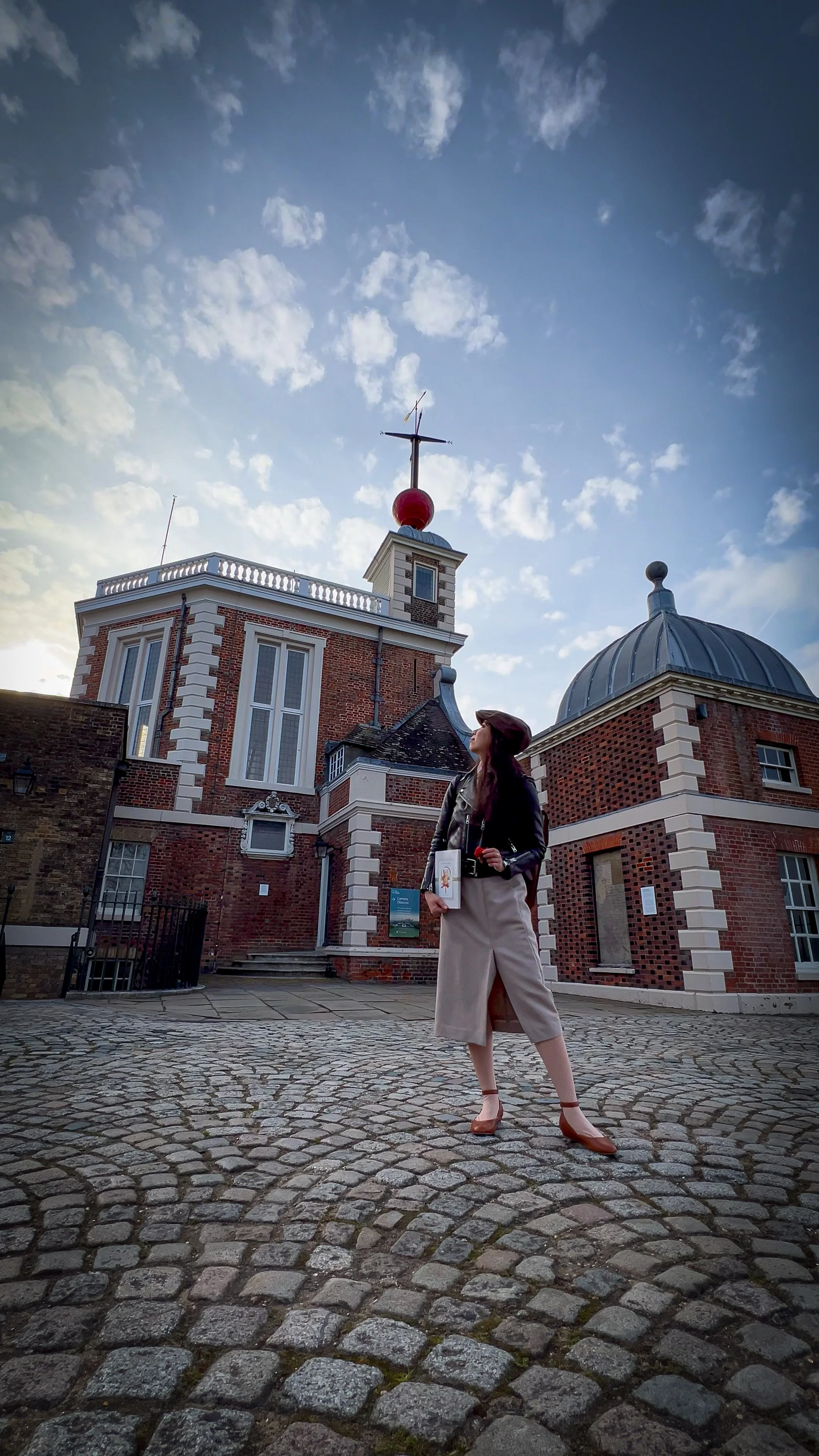
“I hope my work offers a way for you to reframe—rather than blame.”
Literary Works